
2026
Bookmarks Festival of Books and Authors Bookmarks Festival of Books and Authors
Some book events are about looking for your next book, while others are about meeting the people who make those books possible. Bookmarks Festival of Books & Authors brings both together, creating a place where readers can meet writers, listen to their stories, and enjoy books with other people who love them. The festival has become the largest annual book festival in the Carolinas, welcoming more than 30,000 attendees each year and bringing together authors from different parts of the country.
The value of the festival comes from the simple connection between readers and authors. With talks, discussions, signings, and events for different ages, Bookmarks gives people a chance to experience books in a more personal way. The 2026 festival is also bringing well-known voices such as John Green for its opening keynote and Jodi Picoult for its closing keynote, giving readers even more reasons to come together around stories.
For Kravitz and Sons, being part of a celebration like this means more than simply putting books on display. It means giving our authors and their stories another chance to meet readers who may be looking for something new.
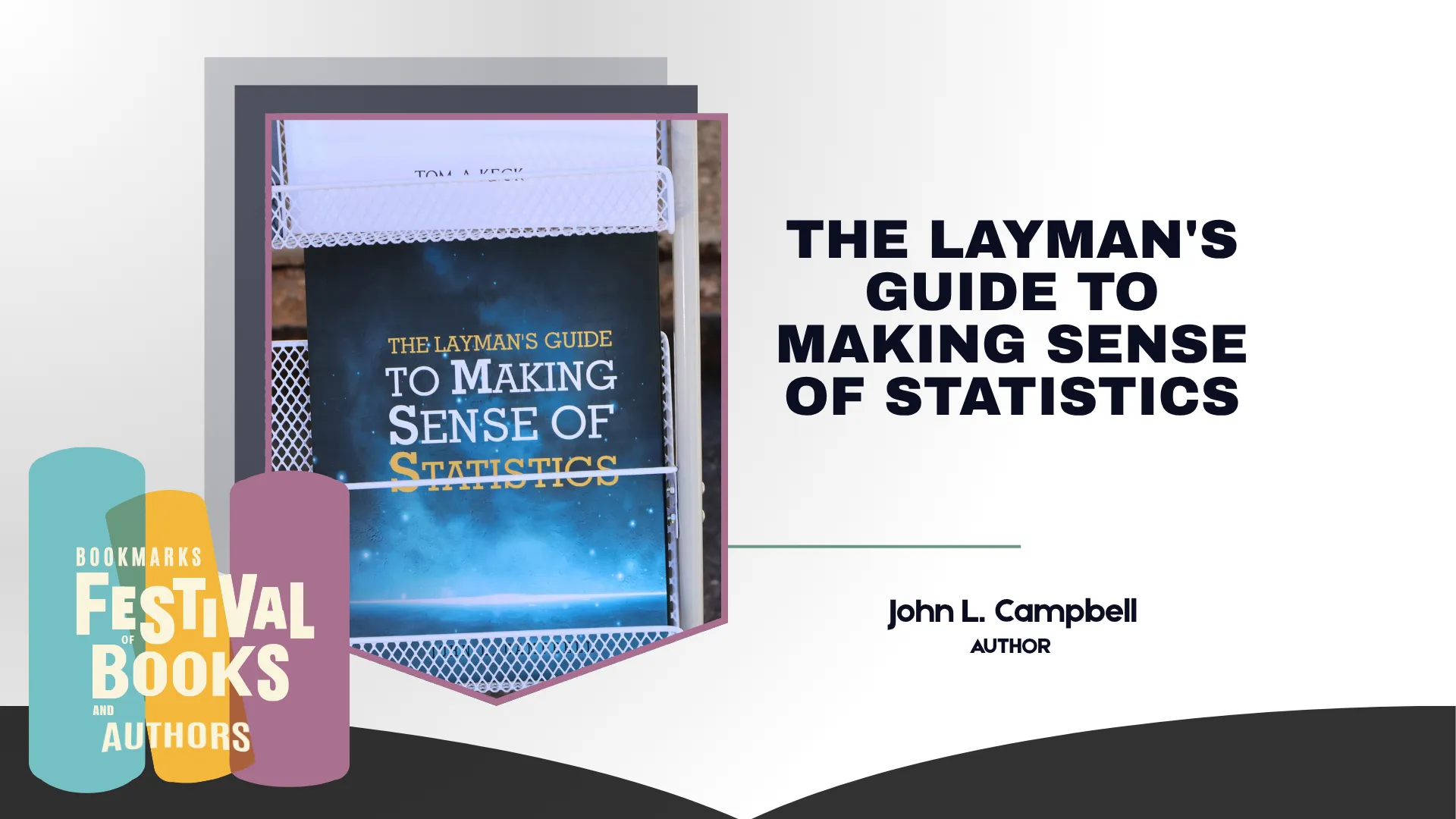
And speaking of stories worth discovering, The Layman’s Guide To Making Sense Of Statistics by John L. Campbell brings a different kind of reading experience to the festival. The book looks at statistics in a way that does not expect readers to already be experts in numbers. Instead, it helps readers understand what statistics mean, how they are used, and why people should be careful when looking at numbers presented to them. It takes readers through the history and nature of statistics, while also showing how statistics can affect everyday decisions, research, business, government, and society.
The Mind Behind the Numbers
ehind a book about statistics is an author who has spent years working around research, teaching, and the study of information. John L. Campbell earned both his bachelor’s and master’s degrees from Northeastern University in Boston. His career included work in psychological research, teaching experimental psychology and research statistics, and managing senior service programs for more than 30 years. He is now retired and continues to spend time thinking about science, statistics, philosophy, history, and related subjects.
What makes Campbell interesting as a writer is the way he approaches subjects that can easily become difficult to understand. Instead of making the reader feel like they need to be a mathematician first, his writing focuses on explaining the ideas behind statistics. The book itself was written for people who want to become more statistically literate without having to spend their time working through formulas and calculations. The author even explains that readers who only want to understand the basic idea of statistics can still gain something from the book.
When Numbers Become Part of Everyday Life
The Layman’s Guide To Making Sense Of Statistics is a nonfiction book, so there are no fictional characters or made-up settings leading the story. Instead, the people and ideas in the book come from the real history of statistics. Readers meet important figures connected to the development of statistics, including William Petty, John Graunt, Adolphe Quetelet, Francis Galton, Karl Pearson, Charles Spearman, and others. Their work helps show how statistics developed from the simple need to collect information into a field used in many parts of modern life.
The book moves between history, research, and everyday situations. It explains how statistics can describe groups, how samples can be used to understand larger populations, and why the way information is collected matters. It also discusses averages, dispersion, differences, correlations, regression, probability, significance testing, and other ideas. But the interesting part is that the book does not rely on the usual textbook style filled with equations, graphs, and exercises. Campbell explains in the preface that readers will not find formulas or calculation exercises in the book, because its main purpose is to help readers understand the ideas behind statistics.
Give Numbers a Second Look
Do not believe every number just because it looks precise. The book encourages readers to question statistical information and understand where it came from. A percentage without enough context, a poorly chosen sample, or a relationship between two things can easily lead people to the wrong conclusion. Campbell also makes an important point about correlation and causation, showing why two things being connected does not automatically mean that one caused the other. This makes the book useful not only for students and professionals, but also for everyday readers who see statistics in the news, advertisements, surveys, research, and social discussions.
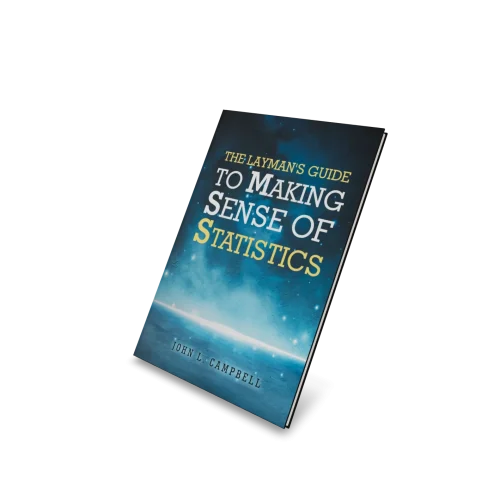
The Layman’s Guide To Making Sense Of Statistics
A Practical Look at the Numbers We See Every Day