
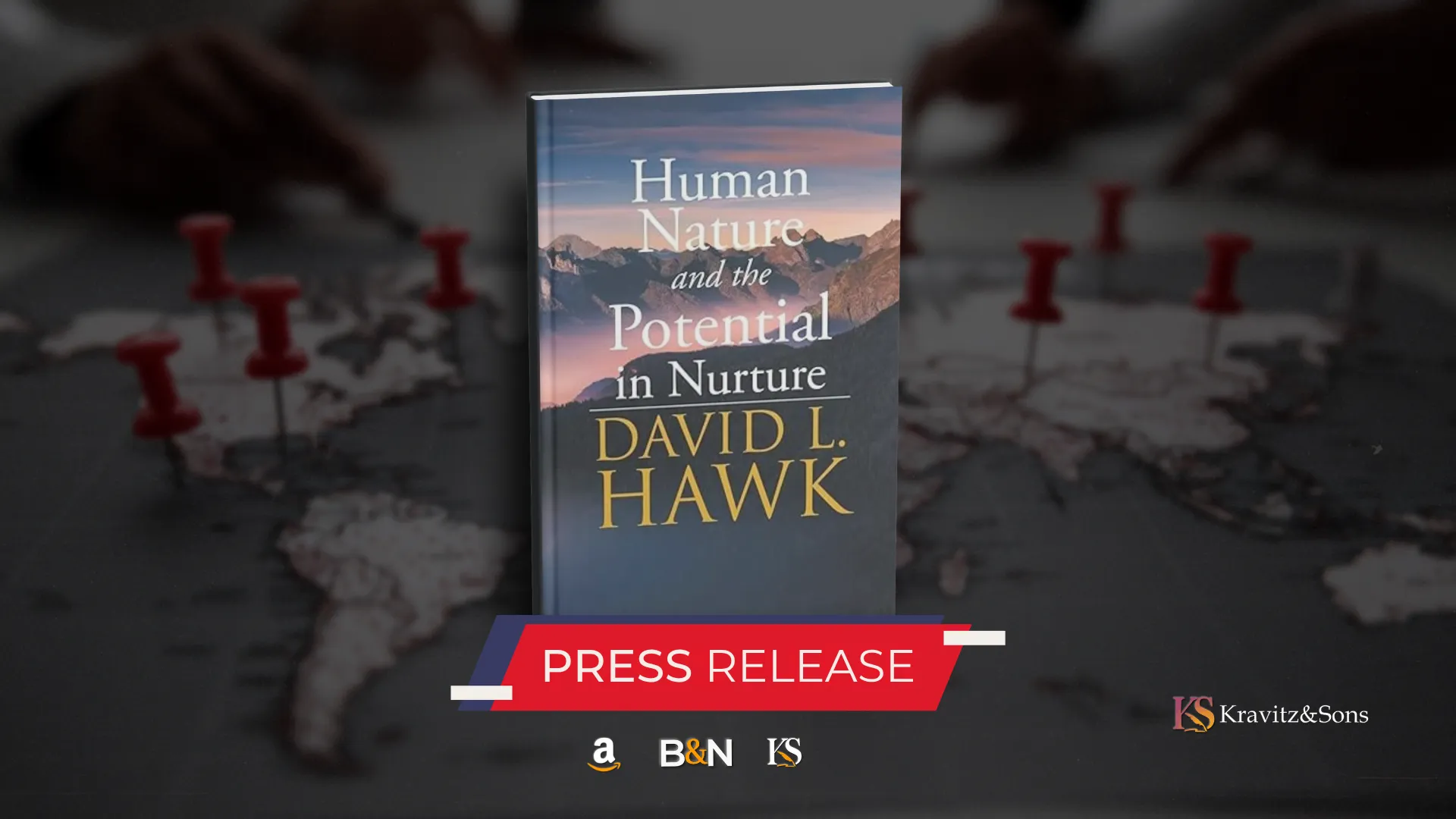
Human Systems and Industrial Change Examined
Human Nature and the Potential in Nurture by David Hawk is a research-based exploration of the relationship between industrial development, human systems, and the natural environment. Drawing from decades of academic research and professional experience, Hawk investigates how technological advancement and institutional structures have influenced the way societies function and interact with the world around them. Through a systems-thinking approach, the book offers readers an opportunity to examine the deeper forces shaping modern civilization.
Built upon Hawk’s doctoral research in systems sciences and enriched by collaborations with governments, businesses, and academic institutions, the book presents a multidisciplinary perspective on the development of human-created systems. By analyzing the evolution of industrialization and its impact on society, Human Nature and the Potential in Nurture provides valuable insights into the connections between technological progress, governance, and environmental conditions.
Understanding the Systems We Create
As societies continue to navigate rapid technological change and environmental concerns, Human Nature and the Potential in Nurture offers a timely examination of how human-created systems influence everyday life. The book encourages readers to think critically about the structures that shape society and the long-term effects of industrial development.
- Combines systems science, governance, and environmental studies into a unified perspective.
- Explores the long-term effects of industrialization on society and nature.
- Encourages critical thinking about human-created systems and institutions.
- Provides interdisciplinary insights drawn from research and professional experience.
- Examines the relationship between technological advancement and environmental change.
- Appeals to readers interested in sustainability, leadership, and systems thinking.
Tracing the Evolution of Human-Created Systems
The main goal of Human Nature and the Potential in Nurture is an investigation into how industrialization transformed the way societies organize resources and meet essential human needs. Hawk examines the historical shift from naturally occurring systems toward increasingly engineered environments, a process he describes as the growth of the “science of the artificial.” Through this perspective, readers gain a deeper understanding of how technological innovations have shaped modern civilization.
The book also explores the role of governance and institutional decision-making in managing increasingly complex systems. Applying principles of systems thinking, Hawk analyzes how organizations, governments, and communities respond to challenges and how those responses affect both social and environmental outcomes. The discussion bridges multiple disciplines, including planning, engineering, management, leadership, and public policy.
A Lifetime of Global Experience and Research
David Hawk was born and raised on a farm in Iowa before pursuing studies in engineering, city planning, and corporate planning. His professional journey includes military service in Vietnam, urban planning initiatives across Europe and North America, and academic appointments in several countries. These experiences provided him with a broad understanding of the systems that shape communities, institutions, and societies.
Throughout his distinguished career, Hawk has worked as a professor, consultant, academic administrator, and educational innovator. He has contributed to the development of programs in engineering, architecture, business management, leadership, planning, and public policy, while also helping establish doctoral-level executive education institutes in Sweden and Finland.
Hawk’s writing style is analytical, research-driven, and interdisciplinary. He combines scholarly rigor with practical observation, presenting complex ideas in a way that encourages readers to think critically about the systems that govern modern life. His ability to connect historical developments, organizational structures, and environmental concerns makes his work both intellectually engaging and highly relevant.
Why You Should Read the Book
Human Nature and the Potential in Nurture offers readers a unique opportunity to explore the forces that have shaped modern society. Rather than examining environmental challenges in isolation, the book investigates the systems, institutions, and patterns of behavior that influence both human communities and the natural world. Its interdisciplinary perspective provides valuable insights for anyone seeking a deeper understanding of contemporary social and environmental issues.
Whether you are interested in systems science, leadership, public policy, sustainability, or the history of industrial development, this book presents a thoughtful and compelling analysis of how human-created systems continue to shape the future. It encourages readers to question assumptions, examine complex relationships, and gain a broader perspective on the world they inhabit.
Featured Links
Human Nature and the Potential in Nurture has been distributed to various online platforms and is available in print and digital formats.