
2026
Frankfurter Buchmesse Frankfurt Book Fair
For decades, Frankfurter Buchmesse has been one of the biggest meeting places for the international publishing world. What started in 1949 with around 200 publishers has grown into a global event where publishers, authors, agents, media professionals, and creative industries come together to share ideas, make deals, and discover what is next for books and storytelling. Today, the fair is considered one of the world’s leading places for printed and digital content.
The fair is valuable because it brings so many parts of the publishing world into one place. It is not only about books on shelves, but also about rights, translations, new partnerships, technology, and the people behind the stories. The 2026 Frankfurter Buchmesse will take place in October, with Czechia serving as the Guest of Honour under the theme “A Country on the Coast.” The programme will include more than 100 literary and cultural events, with 75 Czech authors expected to take part.
With so many countries, voices, and ideas meeting in one place, Frankfurt has become a space where a book can travel far beyond where it first began. That makes this fair a special place for authors who want their stories to reach new readers and new parts of the world.
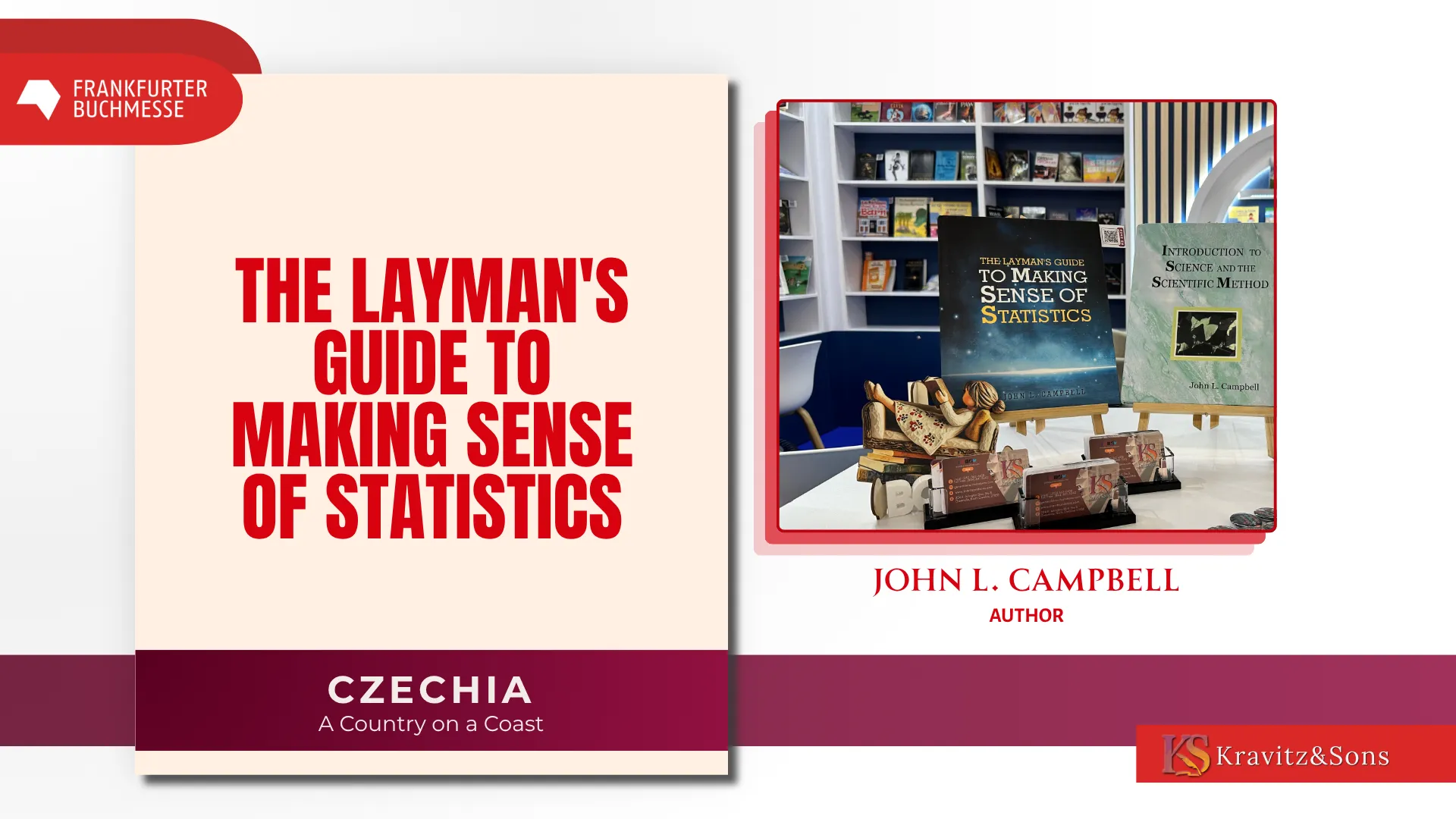
Among the books making that journey is The Layman’s Guide To Making Sense Of Statistics by John L. Campbell. The book takes a subject that many people find difficult and brings it closer to everyday life. Instead of making statistics feel like a wall of formulas, Campbell focuses on understanding what statistics mean, how they are used, and why readers should think carefully about the numbers they see and hear.
The Mind Behind the Numbers
Behind the pages is a writer who has spent much of his life working with education, research, and statistics. John L. Campbell earned his bachelor’s and master’s degrees from Northeastern University in Boston and spent more than 30 years working in psychological research, teaching experimental psychology and research statistics, and managing senior service programs. His experience gives him a strong connection to both research and teaching.
Campbell’s writing style is built around making difficult ideas easier to follow. In the book’s preface, he explains that many readers are not looking to perform statistical calculations but instead want to understand the basic ideas behind statistics and the information they encounter. He also explains that the book was written for people who want to understand statistical information as well as professionals who need to review reports and make decisions from them.
Making Sense of the Numbers Around Us
The Layman’s Guide To Making Sense Of Statistics does not follow the usual path of a statistics textbook. There are no formulas, equations, or exercises for readers to work through. Instead, Campbell starts by looking at what statistics actually means and how the subject developed over time. The book moves through its history before explaining the nature of statistics and how data can become useful information.
Since this is a nonfiction and educational book, there are no traditional characters or fictional settings. Instead, the important figures are the people, researchers, ideas, and examples used to explain how statistics developed. The book discusses historical figures such as William Petty, John Graunt, Adolphe Quetelet, Pierre de Fermat, Blaise Pascal, Jacques Bernoulli, and Carl Friedrich Gauss, while also introducing readers to ideas such as populations, samples, probability, averages, dispersion, correlation, and regression.
One of the biggest lessons in the book is that readers should not simply accept a number because it looks official or complicated. Campbell explains how statistics can be used to describe groups, understand relationships, and make conclusions from samples. He also points out an important difference between correlation and causation, reminding readers that two things being connected does not automatically mean one caused the other. For anyone who regularly sees statistics in the news, business, research, education, or everyday life, this way of thinking can be very useful.
Take a Closer Look at the Numbers
The Layman’s Guide To Making Sense Of Statistics is for readers who want to understand numbers without feeling like they need to become mathematicians first. Making Numbers Understandable for Everyday Readers, the book offers a practical way to look at statistics with more care and confidence.
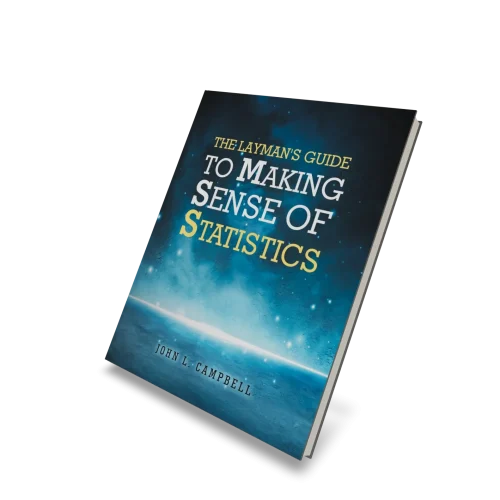
The Layman's Guide To Making Sense Of Statistics
Discover the book and see statistics in a whole new way.