
BookCon 2026 | STORIES THAT COME TO LIFE IN REAL TIME. WHERE FANS MEET THE MINDS BEHIND THE PAGES. A PLAYGROUND FOR READERS, CREATORS, AND IDEAS. PANELS. SIGNINGS. EXPERIENCES THAT FEEL PERSONAL. WHERE POP CULTURE AND LITERATURE COLLIDE. DISCOVERY, CONNECTION, AND NONSTOP ENERGY. A WEEKEND WHERE STORIES STEP OFF THE PAGE. THE SPACE WHERE READERS BECOME PART OF THE STORY.
BookCon emerged as a response to something readers had been wanting for years: a space where they could engage directly with the stories and the people behind them. Evolving from the industry-focused BookExpo, BookCon opened the doors to a wider audience, transforming into a reader-driven event that celebrates not just books, but the experience of storytelling itself. Over time, it has grown into a major gathering where fans, authors, and creators come together in one shared space.
Unlike traditional book fairs, BookCon thrives on interaction. It’s a place where readers don’t just browse, they participate. Panels, live interviews, book signings, and fan-driven discussions fill the event with energy. It creates an environment where stories are not only read but talked about, questioned, and experienced in real time.
The 2026 edition continues to highlight the evolving relationship between readers and storytelling. It reflects a world where audiences are more engaged than ever, shaping conversations, trends, and the way stories are shared. BookCon stands as a space where creativity meets community, and where every voice has the chance to be heard.
Exhibitors from across the publishing world take part, including major publishers, independent authors, media platforms, and creative brands. The event floor becomes a hub of discovery, where new ideas are introduced, connections are built, and stories find their audience.
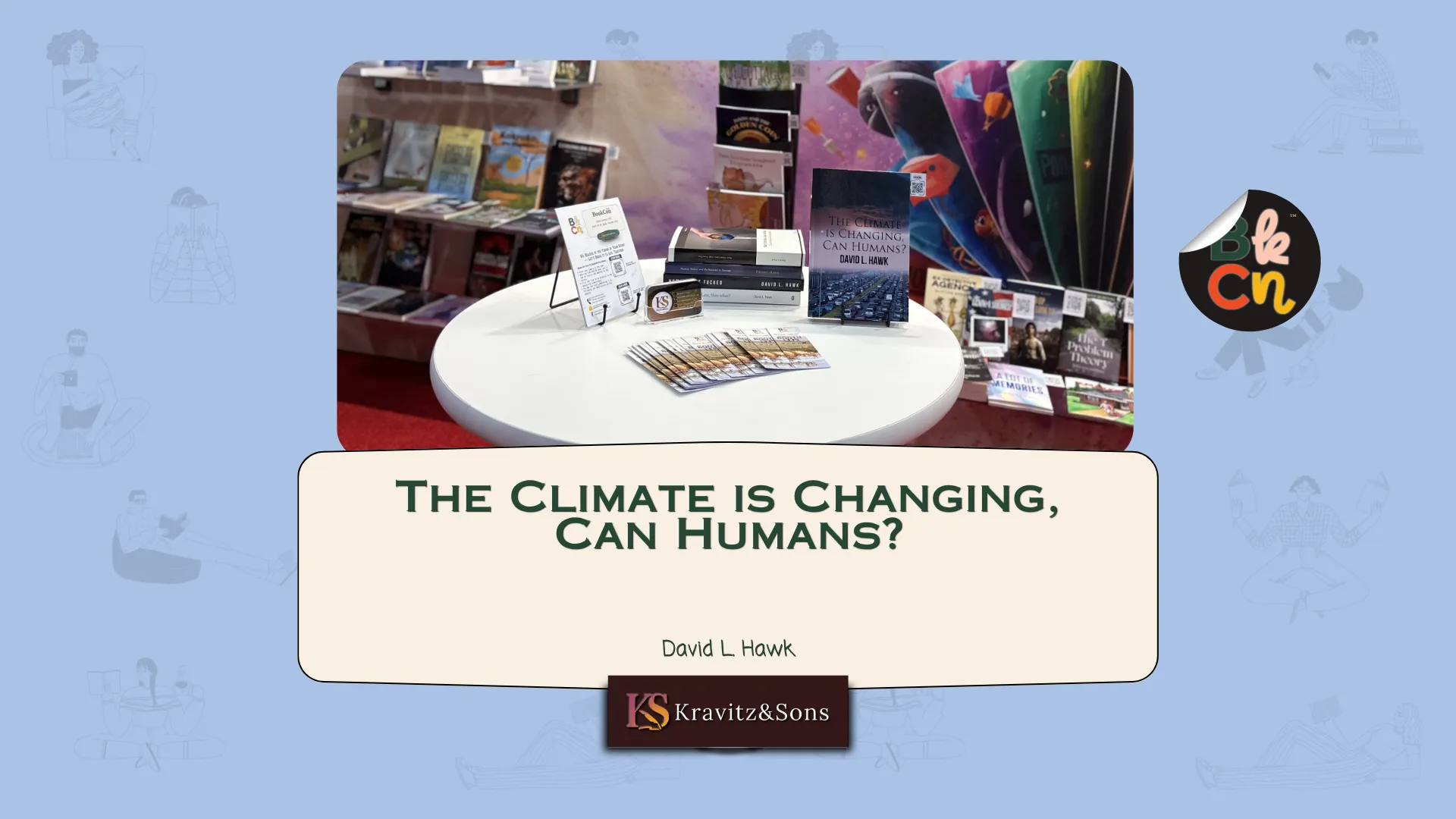
Amid this high-energy and interactive setting, Kravitz and Sons is proud to join BookCon 2026. We’re excited to exhibit The Climate is Changing, Can Humans? by David L. Hawk, a work that moves past the usual climate conversation and focuses on something more uncomfortable. Not just what is happening to the planet, but what is happening with us. It asks a direct question that most people avoid: are humans actually capable of changing the patterns that caused the problem in the first place?
This book doesn’t lean on fear or statistics alone. It shifts the focus to behavior, systems, and the long-standing habits that continue to push environmental damage forward. In a space driven by curiosity and open discussion, it stands out by challenging readers to stop looking outward for answers and start looking at the way human thinking itself may be the root issue.
The Mind That Connects Systems and Consequences
David L. Hawk brings a systems-driven perspective that cuts through surface-level explanations. His background in management, architecture, and systems science allows him to look at climate change not as an isolated issue, but as the result of how human systems have been designed and maintained over time.
His approach is not about pointing fingers. It’s about connecting dots. From industrial growth to modern decision-making, his work reflects a deep understanding of how small patterns scale into global consequences. That kind of perspective gives his writing a steady, almost analytical tone, but one that still carries weight because it’s tied to real-world observation.
A Hard Look at Change and Human Limits
The Climate is Changing, Can Humans? goes beyond describing environmental decline. It traces the crisis back to human choices, cultural beliefs, and systems built on short-term gain rather than long-term balance. The book highlights how the pursuit of control, efficiency, and growth has slowly pushed natural systems past their limits.
It also introduces a deeper concern. The issue may not be whether we want to change, but whether we are even capable of it. The shift from asking “will humans change” to “can humans change” turns the conversation into something more serious, almost unsettling.
There are no characters guiding the story, but the role of the reader becomes unavoidable. The setting is the real world, shaped by industry, policy, and everyday decisions. The message is direct: the climate crisis is not just an environmental issue. It is a human systems issue, and unless those systems change, the outcomes will not either.
When the Question Becomes the Message
What makes this book stand out is how it refuses to offer comfort. It doesn’t promise easy solutions or quick fixes. Instead, it presents a question and lets it sit there, forcing readers to think about their place in a much bigger system.
That approach works because it aligns with Hawk’s background. He has spent years studying how systems operate, where they fail, and why they repeat the same patterns. This book feels like a continuation of that work, bringing everything together into one clear challenge.
asdasdasdasdasda
asdas
asdas
The Climate is Changing, Can Humans?
Face the question and decide where you stan