
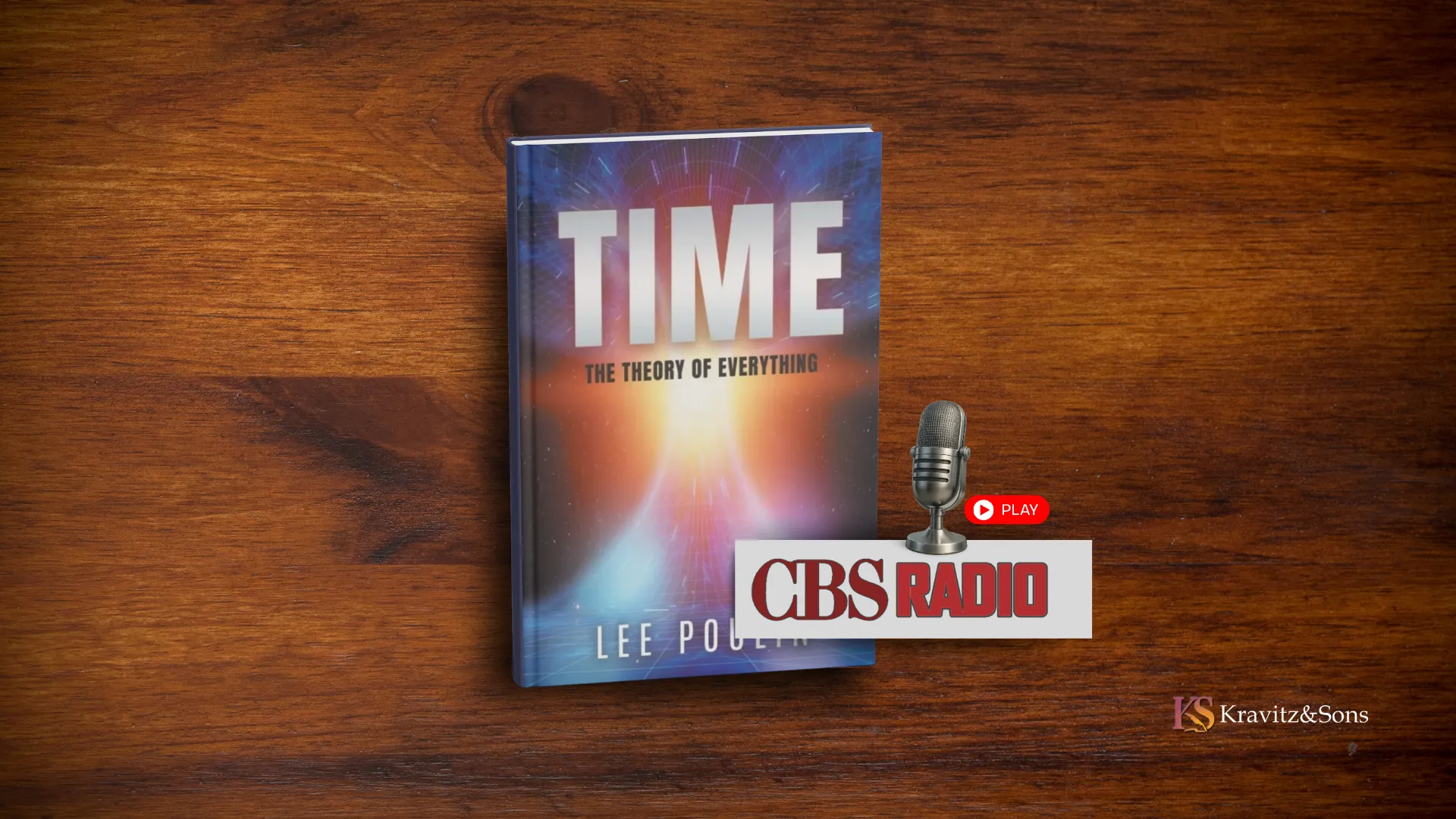
" Time: The Theory of Everything Time: The Theory of Everything "
CBS People of Distinction
People of Distinction is a nationally syndicated interview program that showcases authors, professionals, innovators, and individuals whose work has made a meaningful impact on others. Created by Al Cole of CBS Radio and frequently hosted by his son, Benji Cole, the program brings listeners engaging conversations about personal journeys, accomplishments, and thought-provoking ideas. Through its interviews, the show introduces audiences to people whose stories inspire, educate, and encourage meaningful discussion.
With its wide-reaching platform, People of Distinction gives authors and experts an opportunity to share their experiences, knowledge, and perspectives with listeners across the globe. The program goes beyond simply introducing books, allowing guests to discuss the inspiration behind their work, the lessons they have learned, and the ideas they hope to leave with their audience.
The Host Benji Cole
Benji Cole is the host of People of Distinction, a nationally syndicated talk show known for featuring authors, professionals, and thought leaders from different backgrounds. As the son of broadcaster Al Cole, Benji continues the show’s mission of bringing meaningful conversations to a broad audience. His interviews allow guests to open up about their experiences, creative pursuits, and the ideas that shaped their work.
Through his interviewing style, Benji combines curiosity, enthusiasm, and thoughtful questions to create conversations that give audiences a deeper understanding of each guest. His work on People of Distinction helps authors share their stories with readers and listeners while encouraging people to discover new perspectives and meaningful ideas.
From a Question at Fourteen to a Book That Challenges Scientific Thinking
Lee Poulin‘s interest in the nature of time began when he was just fourteen years old. During a high school science class, his teacher explained that looking at distant galaxies meant looking back in time because light takes years to reach Earth. Lee then asked a simple question: if the galaxy was seen as it existed thousands of years ago, where was it today? The answer he received did not satisfy him, and the question stayed with him for decades. As he continued exploring astronomy and speaking with people in the scientific community, he became increasingly interested in finding an explanation that made sense to him.
That curiosity eventually became the driving force behind Time: The Theory of Everything. Lee explained that he wanted to share his ideas with scientists, but he struggled to get people to consider or review his work. Frustrated by the lack of discussion, he decided to put his thoughts together in a book. His central argument is that time, as people commonly understand it, may not be a fundamental part of reality. He uses the journey of light to explain his perspective, suggesting that what we see is always an image of something that has already happened. Through the book, he hopes readers will question familiar explanations and become open to considering another way of looking at the universe
Exploring Time, Light, and the Universe Through a Different Lens
Time: The Theory of Everything presents Lee Poulin‘s proposed time-wedge theory, an alternative way of thinking about time and how people observe the universe. One of the book’s central ideas is that time can be understood as a kind of movie of reality. Lee compares the continuous arrival of light to individual frames in a film. Since light takes time to travel from an object to an observer, what people see is not necessarily what is happening at that exact moment. He uses examples involving distant galaxies and Mars to explain why observers in different locations may see different versions of the same object.
The book goes on to explore how this idea relates to subjects such as multiple universes, gravity, dark matter, dark energy, and quantum physics. Lee questions several established scientific explanations and presents his own interpretations of these topics. He also challenges aspects of Einstein’s theories, particularly the role of time in scientific calculations. These are Poulin’s personal arguments and proposed explanations, rather than established scientific conclusions. Readers are invited to follow his reasoning, examine the examples he presents, and think critically about the questions surrounding space and time.
The Curiosity Behind the Theory
Lee Poulin‘s interest in astronomy began with a question that followed him from his teenage years into adulthood. His curiosity eventually led him to become involved in astronomy beyond the classroom. During the interview, he shared that he served as an astronomer and worked as the director of Markham Park Observatory in Florida for five years. Through this experience, he had opportunities to interact with different people in the scientific community, including visitors and individuals connected with the University of Miami.
Although the interview does not provide a detailed account of his entire professional background, it makes clear that his interest in science and the universe has been a long-standing part of his life. Rather than keeping his questions to himself, Lee chose to organize his ideas into a book and make them available to a wider audience. His goal is not simply to present another explanation, but to encourage people to examine ideas they may have accepted without question.
The Theory of Everything Deserves a Wider Conversation
One reason Time: The Theory of Everything deserves attention is the question at the heart of the book. Time is something people use every day, yet understanding what it actually means can become surprisingly complicated when viewed through the lens of astronomy and physics. Lee takes a familiar subject and turns it into an invitation to think more deeply about how people observe the world and the universe around them. Whether readers agree with his conclusions or not, the questions he raises can lead to interesting discussions about science, perception, and reality.
Readers can also learn the value of questioning, researching, and exploring ideas beyond their usual point of view. During the interview, Lee explained that he would rather have people read his book and challenge his arguments than ignore them completely. Benji Cole also brought attention to this idea, pointing out how important it is for people to continue having conversations with those who think differently. That message gives the interview another layer beyond the scientific discussion: meaningful progress often begins when people are willing to listen, ask questions, and exchange perspectives.
For readers interested in astronomy, physics, and the mysteries of the universe, this book offers an unconventional perspective worth examining. It is best approached with curiosity and a critical mind, especially because several of its claims challenge widely accepted scientific theories. Time: The Theory of Everything may not provide answers that every reader will agree with, but it gives them plenty to question and discuss. And sometimes, a thought-provoking read is one that encourages us to look at what we think we know from an entirely different angle.