
2026
Frankfurter Buchmesse Frankfurt Book Fair
For decades, Frankfurter Buchmesse has been one of the biggest meeting places for the international publishing world. What started in 1949 with around 200 publishers has grown into a global event where publishers, authors, agents, media professionals, and creative industries come together to share ideas, make deals, and discover what is next for books and storytelling. Today, the fair is considered one of the world’s leading places for printed and digital content.
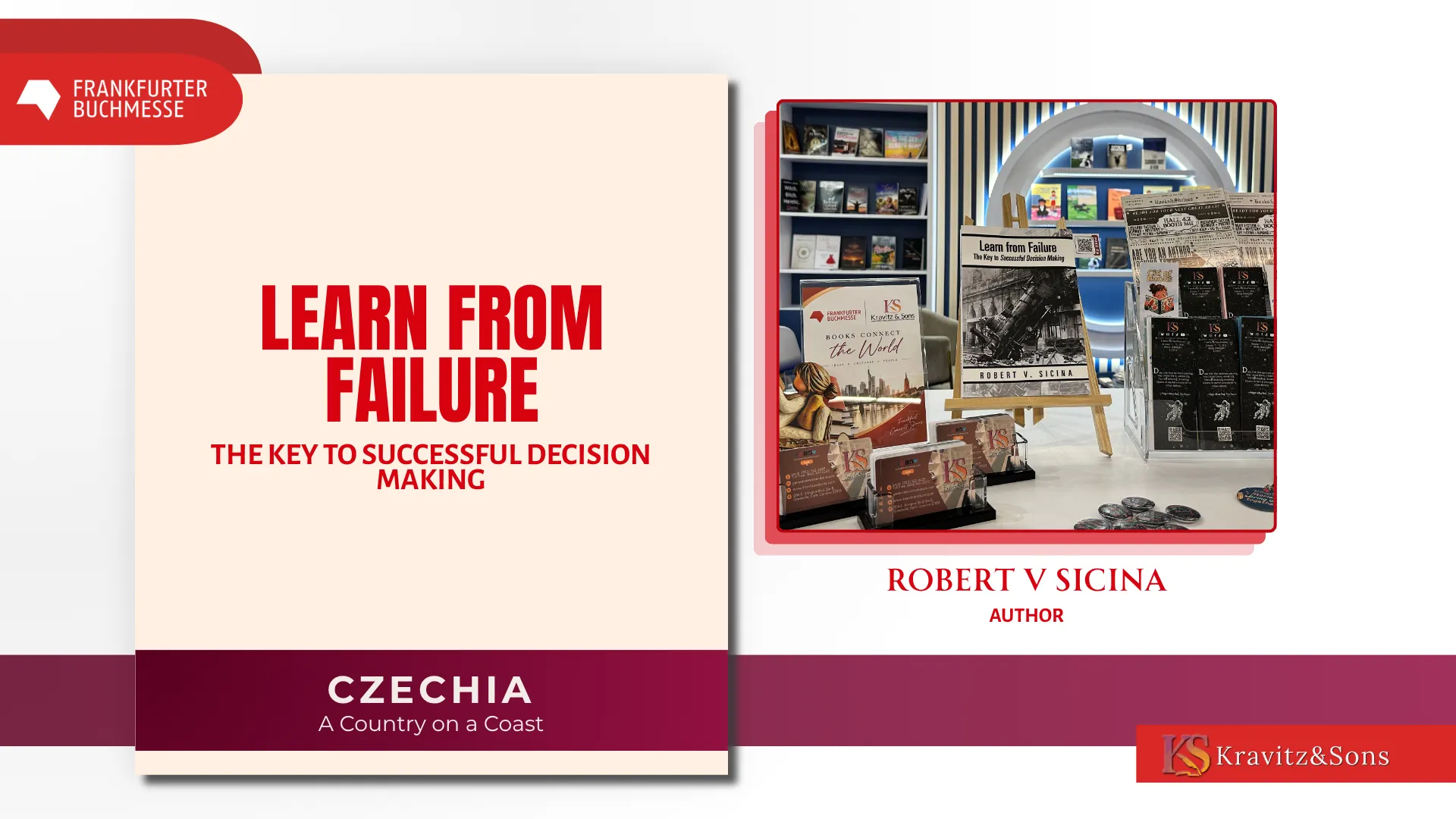
The fair is valuable because it brings so many parts of the publishing world into one place. It is not only about books on shelves, but also about rights, translations, new partnerships, technology, and the people behind the stories. The 2026 Frankfurter Buchmesse will take place in October, with Czechia serving as the Guest of Honour under the theme “A Country on the Coast.” The programme will include more than 100 literary and cultural events, with 75 Czech authors expected to take part.
With so many countries, voices, and ideas meeting in one place, Frankfurt has become a space where a book can travel far beyond where it first began. That makes this fair a special place for authors who want their stories to reach new readers and new parts of the world.
Among the stories making that journey is Learn from Failure: The Key to Successful Decision Making by Robert V. Sicina. The book looks at one thing that everyone experiences but not everyone understands well, failure. Through business experiences, personal stories, and examples from major organizations, Sicina explores how poor decisions happen and how people can use those failures to become better decision-makers. It is a book about business, but its ideas can also reach people who simply want to make better choices in their own lives.
From Executive Experience to Lessons Worth Sharing
There is something interesting about an author who spends years making important decisions, seeing what works, seeing what does not, and then turning those experiences into lessons for others. That is the path behind Robert V. Sicina, whose career has included senior executive positions at Citibank, American Express, and several entrepreneurial ventures. He spent fourteen years with Citibank in Latin America, where he served as country manager of Colombia and later held major financial leadership roles. He eventually became CFO of Citibank’s International Consumer Group and its U.S. credit card business before moving to American Express, where he became president of American Express Bank Ltd. and later president of its Latin American division.
But Sicina’s work did not stop in the business world. His experience as an educator became an important part of how Learn from Failure came to life. According to the book, he was asked by the American University Kogod School of Business to develop a new course about sixteen years before the book was written. He built the course around real-life cases of failure and used what he called post-fact analysis, or “Monday-morning quarterbacking,” to help students understand what could have been done differently. Over time, his teaching developed into a larger idea about the causes of failure in decision-making across business, warfare, and international development.
Looking at Failure Through a Different Lens
At the center of Learn from Failure is a simple idea: a decision is an action, or a choice not to act, that is supposed to move a situation from where it is now toward a desired result. When that result is not reached, Sicina defines it as failure. The book does not treat failure as something that should simply be avoided or hidden. Instead, it asks readers to look closely at what caused it and what can be learned from it.
One of the strongest parts of the book is Sicina’s own story from his time running a Citibank subsidiary in Bogota, Colombia. The situation involved local investors, government rules, business control, and a difficult new shareholder. What first looked like a problem that could be solved through careful business moves became much more complicated. Sicina tried different solutions, including finding buyers for the shares, and at one point believed that a local archdiocese could solve the shareholder problem. That plan eventually failed when the archdiocese stopped responding. Years later, Sicina returned to the story and used it to examine the decisions he made, including his own overconfidence and failure to prepare a strong Plan B.
From there, the book becomes bigger than one person’s story. Sicina introduces the “Cube,” a framework built around irrationality, complexity, uncertainty, leadership, management, and oversight. The idea is to place the facts of a failed decision into this framework and then look at what went wrong. The book also talks about biases, mental models, strategy, and the difference between leadership and management. What makes the approach interesting is that the lessons are not limited to one company or one executive. The book suggests that understanding failure can help people improve decisions in business, organizations, and even their personal lives.
Take a Closer Look at the Decisions Behind the Story
Sometimes failure is not the end of the road. Sometimes, it is the part of the story that teaches us where we went wrong and what we can do differently next time. Learn from Failure: The Key to Successful Decision Making gives readers a chance to look at failure from the inside and understand the decisions that come before it.
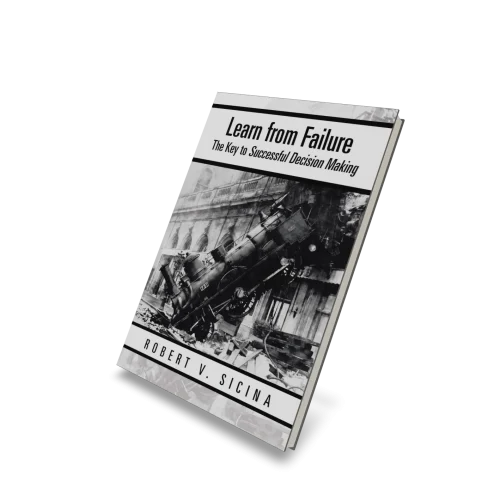
Learn from Failure: The Key to Successful Decision Making
Discover Robert V. Sicina’s lessons on failure, choices, and making better decisions.