
BookCon 2026 | STORIES THAT COME TO LIFE IN REAL TIME. WHERE FANS MEET THE MINDS BEHIND THE PAGES. A PLAYGROUND FOR READERS, CREATORS, AND IDEAS. PANELS. SIGNINGS. EXPERIENCES THAT FEEL PERSONAL. WHERE POP CULTURE AND LITERATURE COLLIDE. DISCOVERY, CONNECTION, AND NONSTOP ENERGY. A WEEKEND WHERE STORIES STEP OFF THE PAGE. THE SPACE WHERE READERS BECOME PART OF THE STORY.
BookCon emerged as a response to something readers had been wanting for years: a space where they could engage directly with the stories and the people behind them. Evolving from the industry-focused BookExpo, BookCon opened the doors to a wider audience, transforming into a reader-driven event that celebrates not just books, but the experience of storytelling itself. Over time, it has grown into a major gathering where fans, authors, and creators come together in one shared space.
Unlike traditional book fairs, BookCon thrives on interaction. It’s a place where readers don’t just browse, they participate. Panels, live interviews, book signings, and fan-driven discussions fill the event with energy. It creates an environment where stories are not only read but talked about, questioned, and experienced in real time.
The 2026 edition continues to highlight the evolving relationship between readers and storytelling. It reflects a world where audiences are more engaged than ever, shaping conversations, trends, and the way stories are shared. BookCon stands as a space where creativity meets community, and where every voice has the chance to be heard.
Exhibitors from across the publishing world take part, including major publishers, independent authors, media platforms, and creative brands. The event floor becomes a hub of discovery, where new ideas are introduced, connections are built, and stories find their audience.
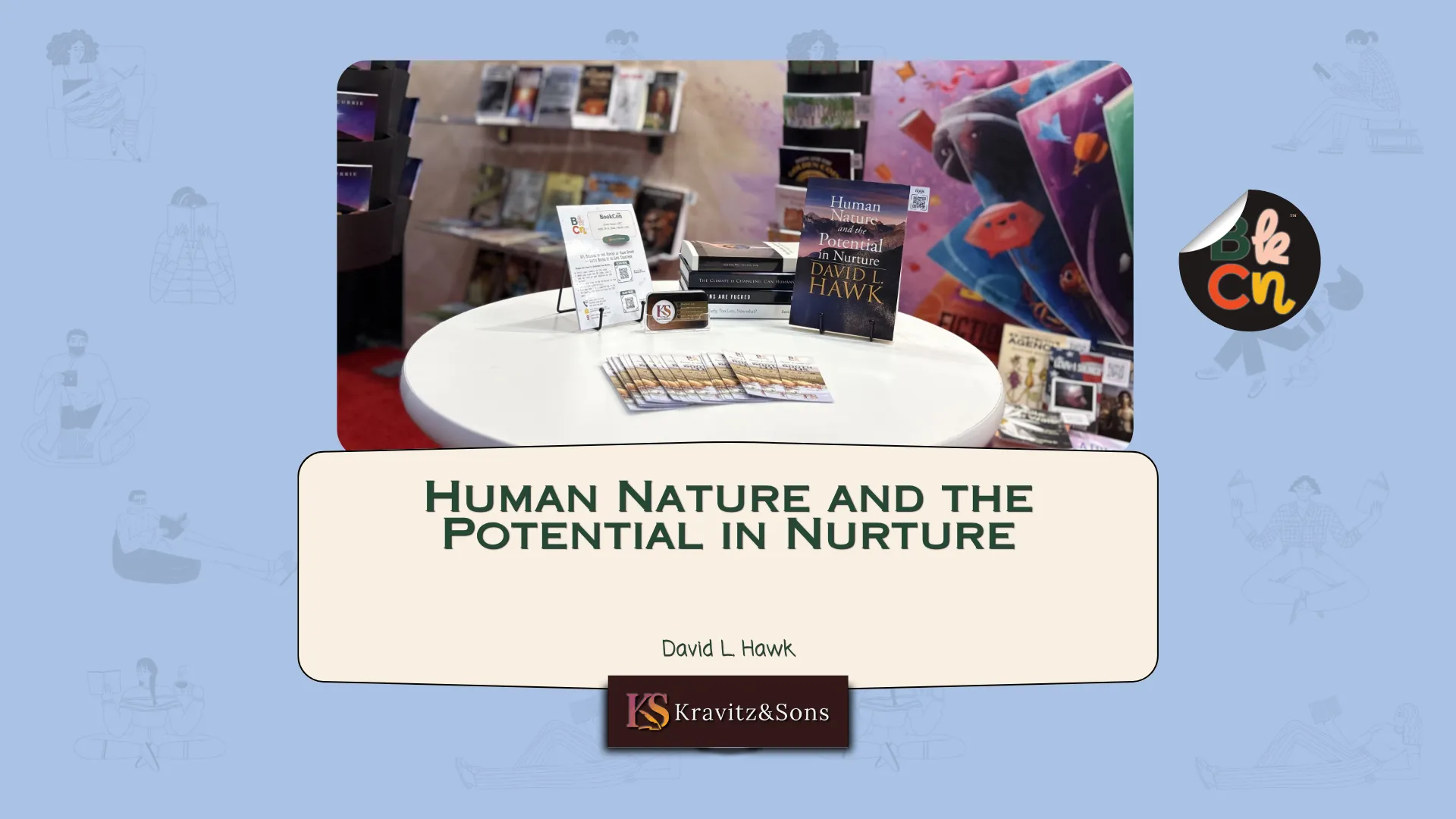
Amid this high-energy and interactive setting, Kravitz and Sons is proud to join BookCon 2026. We’re excited to exhibit Human Nature and the Potential in Nurture by David L. Hawk, a work that examines the relationship between human behavior and the natural world, and how patterns of control, conflict, and misunderstanding have shaped both. It presents a thoughtful look at how people interact not only with nature but with each other, revealing deeper issues behind environmental and social challenges.
The book builds from research that connects human systems with environmental consequences, showing how attempts to regulate through pressure and control often lead to more harm than resolution. In a space driven by engagement and discovery, this book offers a grounded perspective that invites readers to reflect on how change begins not just in systems, but in human thinking and behavior.
A Career Built on Systems, Experience, and Observation
David L. Hawk brings a lifetime of academic and real-world experience into his writing. Raised on an Iowa farm, his early life already placed him close to the realities of nature and human dependence on it. His academic path took him through engineering, architecture, city planning, and corporate planning, eventually leading to advanced research in systems sciences at the University of Pennsylvania.
His work extended across countries and disciplines, from city planning in London to research collaborations in Sweden and leadership roles in academic institutions worldwide. He has developed programs, taught across multiple fields, and worked directly with both organizations and governments. His writing reflects that wide exposure, shaped not by theory alone but by direct involvement in how systems function and where they break down.
Looking at Human Behavior and Its Impact
This book explores how human relationships, both with each other and with nature, are often managed through systems of control that rely on pressure and regulation. It highlights how these approaches, instead of solving problems, can create deeper conflict and long-term damage. The discussion moves through research findings that show how these patterns repeat across different areas of life.
It also connects these ideas to environmental issues, showing how the same mindset used in human interactions carries over into how people treat the natural world. The deterioration of the environment is presented not as an isolated issue, but as part of a larger pattern of behavior. The book invites readers to see these connections clearly and consider the consequences of continuing on the same path.
Rather than offering simple answers, the book lays out observations and findings that encourage reflection. It presents a perspective shaped by research and experience, giving readers space to think about how change might begin and what it would require on both a personal and collective level.
When the Message and the Messenger Align
What stands out here is how closely the ideas in the book reflect the life and work of David L. Hawk himself. The same person who studied systems across countries, worked with governments and institutions, and questioned how humans organize and regulate their world is the one presenting these insights. It does not feel disconnected or theoretical. It feels consistent with a career spent observing, testing, and challenging how things are done.
That connection matters. It gives weight to the message because it comes from someone who has been inside those systems, not just writing about them from a distance. For readers, that makes the experience more grounded and easier to trust, especially when dealing with complex topics like human behavior and environmental responsibility.
asdasdasdasdasda
asdas
asdas