
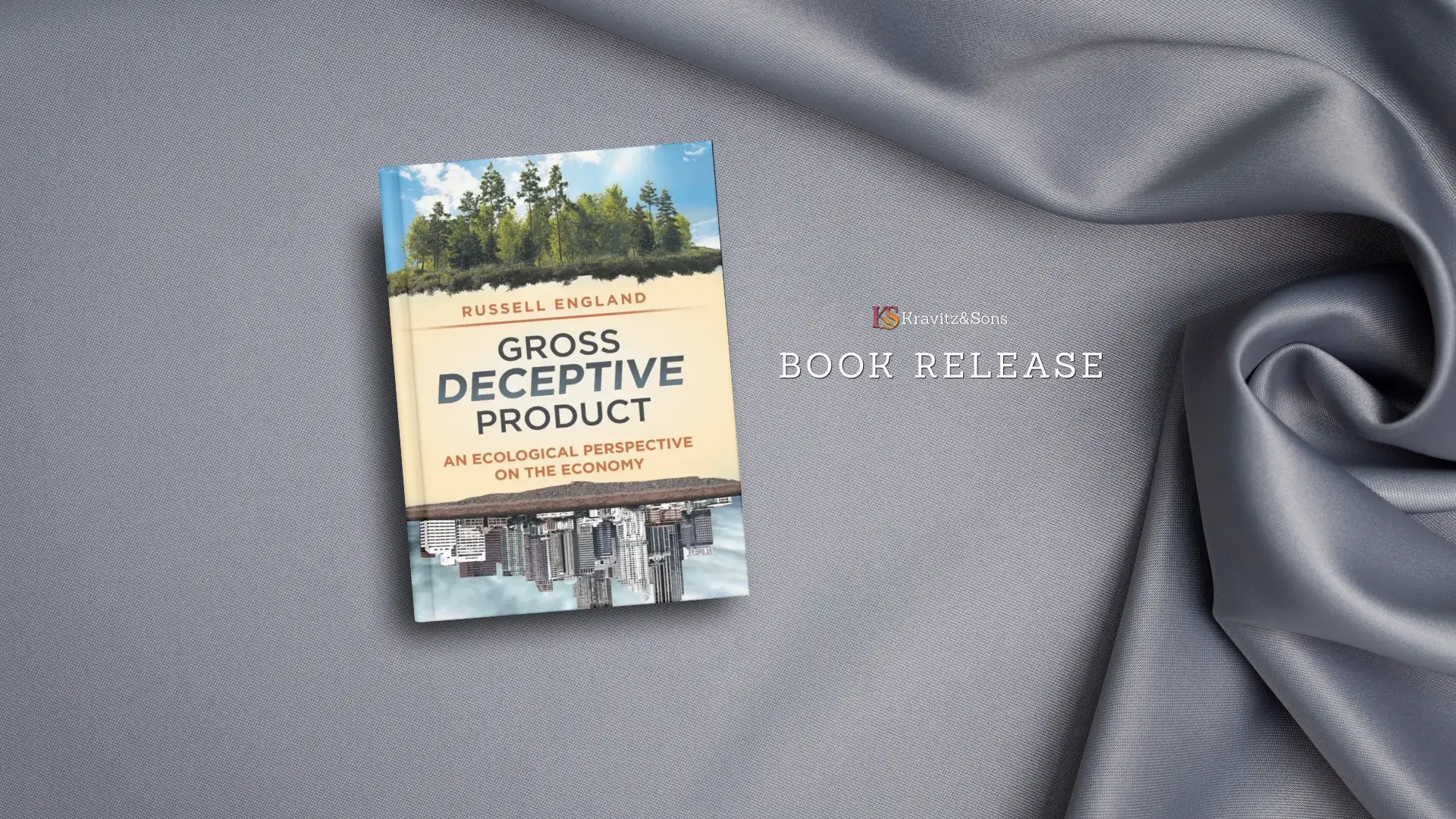
Questioning What We Call Progress
Economic growth is often treated like the ultimate goal, something to chase no matter the cost. Gross Deceptive Product challenges that belief head-on by asking a harder question: what are we really gaining when growth destroys the very systems that support life? The book looks beyond surface-level prosperity and digs into the long-term consequences of endless expansion, debt, and environmental neglect.
In Gross Deceptive Product, the author reframes the economy as something deeply tied to nature, not separate from it. Instead of celebrating bigger numbers and faster production, the book urges readers to consider balance, limits, and responsibility. It stands apart in its genre by refusing to romanticize growth and instead offering a clear-eyed, thoughtful critique of what modern progress actually costs future generations.
…the economy is a subset of the ecosystem, government policy needs to recognize the resource limits to growth and adopt policies that discourage growth that resources cannot support. In other words, government policy should take an ecosystem based approach to planning for the future.
Gross Deceptive Product, Rethinking Government, page 121
Looking Beyond the Numbers
The book teaches that measuring success purely through gross domestic product is misleading. GDP counts activity, not value, meaning it celebrates pollution cleanups, war spending, and debt accumulation as positives. The author explains how this system masks real harm and pushes societies toward short-term wins at long-term expense.
Rather than relying on abstract theory, the book connects economic decisions to everyday life. Population growth, land use, and debt are not treated as distant policy issues but as choices that shape communities, ecosystems, and future stability. The message is clear: growth without limits is not ambition, it is negligence.
What makes this work resonate is its insistence on the idea of “optimum.” More people, more production, and more consumption are not automatically better. By introducing the concept of carrying capacity, the book reframes sustainability as common sense rather than sacrifice, inviting readers to rethink prosperity in human terms.
The Voice Behind the Argument
Russell England writes with clarity and conviction, favoring direct reasoning over emotional exaggeration. The tone is firm but accessible, making complex economic and ecological ideas understandable without oversimplifying them. There is a steady confidence in the writing that comes from long reflection rather than reaction.
Throughout the book, the author’s voice feels grounded in responsibility to future generations. Instead of assigning blame, the writing encourages awareness and accountability. It reads like a careful conversation with someone who has spent years watching systems fail and finally decided to speak plainly about why.
Final Thoughts on a Sustainable Future
Gross Deceptive Product by Russell England is not an attack on progress, it is a call to redefine it. For readers ready to question inherited assumptions and think long-term, this book offers clarity, honesty, and a much-needed shift in perspective. The author invites us to imagine a future built on balance instead of illusion.
Gross Deceptive Product
Rethink success, sustainability, and the future we are leaving behind
Russell England
If you find two books with the same title, please note that this one is the second edition with a 2025 copyright date. Where facts and figures were date-dependent, they were updated in this second edition. Also, the second edition puts forth a stronger argument for the book’s central theme.
Anyone interested in exploring the conflict between economic growth and environmental protection should seriously consider this book. Thanks!
Russ England, Author